
What Are the Most Common Sublimation Printing Problems (and How to Fix Them)?
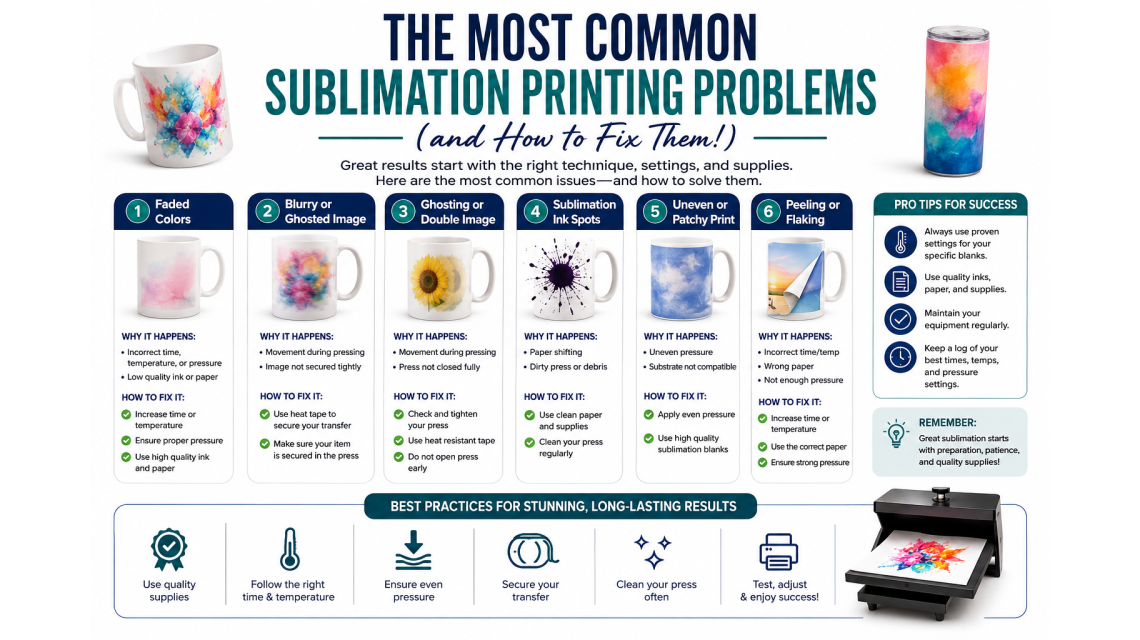
Sublimation printing produces vibrant, long-lasting results when done correctly—but like any production process, issues can arise. From faded colors to ghosting and uneven transfers, most sublimation problems are preventable when you understand their causes.
In this guide, we’ll cover the most common sublimation printing problems, explain why they happen, and show you how to fix or avoid them.
Why Do Sublimation Printing Problems Occur?
Most sublimation issues stem from one of four areas:
- Incorrect materials
- Improper heat press settings
- Low-quality consumables
- Inconsistent production processes
Understanding how sublimation works is the first step to preventing errors.
What Is Sublimation Printing and How Does It Work?
Problem #1: Faded or Dull Colors
What Causes It
- Using non-polyester or uncoated materials
- Low sublimation ink density
- Incorrect heat or press time
- Poor-quality sublimation blanks
How to Fix It
- Use only polyester or polymer-coated blanks
- Verify your heat press temperature and time
- Choose high-quality sublimation blanks designed for vibrant transfer
Problem #2: Ghosting or Blurry Images
Ghosting occurs when the transfer paper shifts during pressing.
Common Causes
- Transfer paper moving during press closure
- Opening the press too quickly
- Uneven pressure
Solutions
- Secure transfer paper with heat-resistant tape
- Apply firm, even pressure
- Allow the press to open smoothly before removing paper
Ghosting is especially noticeable on tiles, photo panels, and hard goods.
Problem #3: Uneven or Patchy Transfers
Why This Happens
- Uneven heat distribution
- Press platen not level
- Product thickness variations
How to Correct It
- Check heat press calibration
- Use pressing pillows or pads when needed
- Ensure full contact between the blank and transfer
This issue is common with apparel and fabric blanks if pressure isn’t consistent.
Problem #4: Scorch Marks or Yellowing
What Causes Scorching
- Excessive temperature
- Over-pressing
- Direct heat on sensitive materials
How to Prevent It
- Lower press temperature slightly
- Reduce press time
- Use protective paper or covers
Lighter-colored fabrics and coated hard goods are more susceptible to heat damage.
Problem #5: Colors Don’t Match the Design
Possible Causes
- Incorrect color profiles
- Monitor vs print color differences
- Ink or paper inconsistencies
Best Practices
- Use proper ICC profiles for your printer. Use a printer specifically designed for sublimation with dense high-quality inks that will have these built into the driver.
- Understand that sublimation colors often appear dull before pressing
- Test designs on scrap blanks before full production
Problem #6: Cracking, Peeling, or Fading Over Time
This is usually a material compatibility issue, not a sublimation flaw.
Causes
- Using cotton or untreated products
- Low-quality coatings
- Incorrect press settings
Solution
- Only use true sublimation blanks rated for heat and pressure
- Avoid products not specifically designed for sublimation
What Are Sublimation Blanks? A Complete Buyer’s Guide
Problem #7: Press Lines or Marks
Why It Happens
- Excess pressure
- Improper pressing surface
- Thick seams or edges
Fixes
- Reduce pressure where possible
- Use pressing pillows to distribute force
- Adjust placement to avoid seams
How to Reduce Sublimation Errors Long-Term
To minimize problems consistently:
- Standardize press settings
- Use reliable materials
- Test new blanks before production
- Maintain your heat press regularly
Many businesses find that investing in higher-quality blanks reduces waste and improves customer satisfaction.
Final Thoughts on Sublimation Troubleshooting
Most sublimation problems are not permanent setbacks—they’re learning opportunities. By understanding the causes behind common issues and using the right materials and techniques, you can achieve consistent, professional-quality results.
High-quality sublimation printing starts with knowledge, preparation, and reliable blanks.
Leave a Comment